
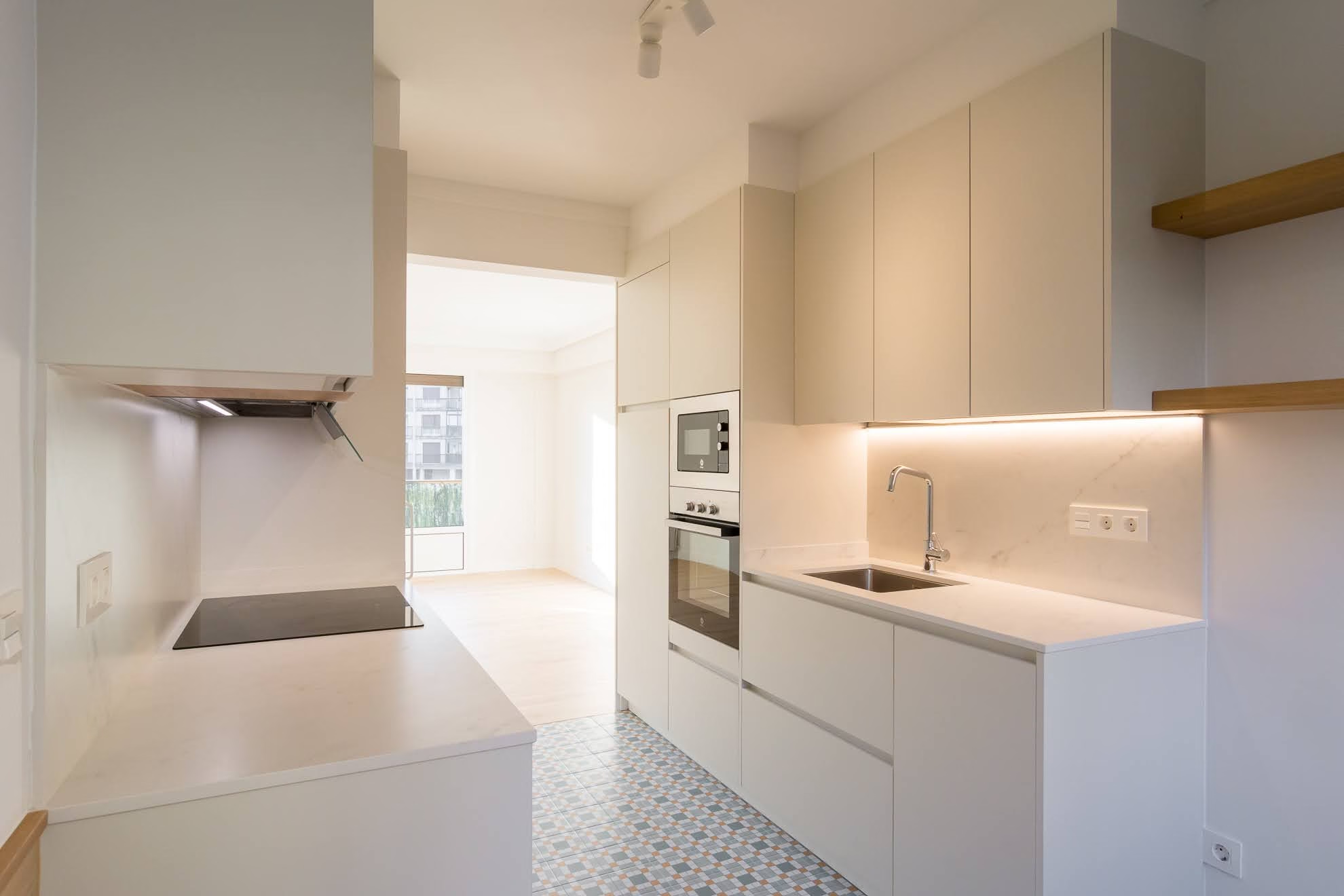
If your kitchen is short on space, it’s normal to worry about space, storage, and even your day-to-day comfort. Our distributors see this every day in their studios. But there’s also something we see every day: the ingenious solutions they provide to maximize every centimeter.
The truth is, although it may seem hard to believe, a well-planned kitchen can be just as beautiful and functional as a large one. Believe us when we tell you that a small kitchen designed based on real needs is more practical than a huge one that doesn’t take into account how it will be used.
If you still don’t believe us, keep reading. In this article, we share practical and realistic solutions with you, supported by real examples of kitchens designed by our distributors, to help you achieve a great small kitchen.
1. Forgo the superfluous
We’re not going to lie to you. The first step when designing a small kitchen is accepting that you’re going to have to give up some things.
But be careful! Only those things that are superfluous or a mere whim. To focus on the essentials, you must first analyze your current experience in the kitchen and what things you really miss. Do you really need those ten small appliances? When was the last time you used the waffle maker?
You can ask yourself the same questions with the rest of the kitchenware and tableware, but also with more bulky items. For example, if batch cooking isn’t your thing, you may be able to do without a large freezer, or if there are only two of you at home, perhaps the dishwasher isn’t essential in your day-to-day life.
Another example is that if you love to cook, you’re going to need plenty of free countertop space, which will affect the storage space and what we store in it.
It’s time to analyze and prioritize your needs and preferences. This information will be very useful for making decisions later.
2. The layout: every centimeter counts
With this information, let’s analyze the available space. Is there natural light? Where does it come in? What rooms are adjacent? Can we open up the space?
The answers to questions like these will guide us when choosing the layout.
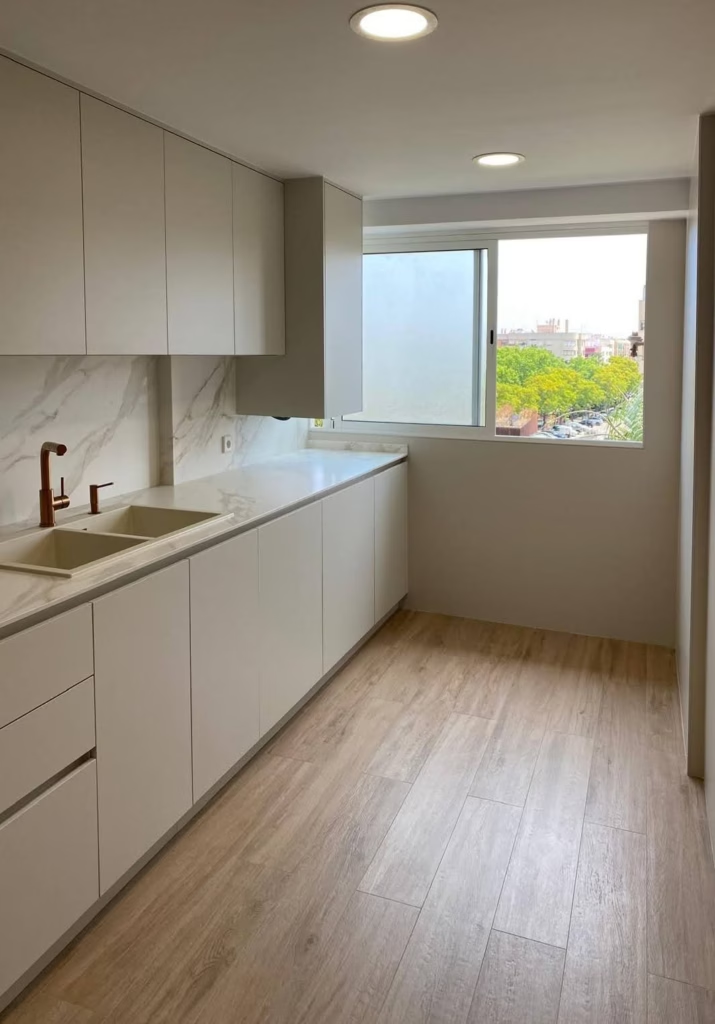
The most common in small kitchens, especially if the space is narrow or open to another small space, are inline kitchens. With this layout, everything is organized on a single front, which frees up passage areas and provides visual order, as in this project by our distributor NCA Interiores:
For their part, L-shaped kitchens work very well in square or rectangular spaces. This layout helps us take advantage of corners that would otherwise be dead and also allows for smooth circulation.
Another option for small or narrow kitchens is the parallel layout. By facing two linear rows of furniture, we multiply the storage capacity and gain in comfort. If you can open the kitchen to the living room, you can generate this layout with a small kitchen peninsula.
2. Smart storage
In a small kitchen, storage is not an extra: it is a necessity. But it’s not about filling the space without criteria, but about thinking about practical and accessible solutions.
Furniture up to the ceiling is a great resource. They take advantage of the height and provide a sense of continuity that also makes the space appear taller.
Interior drawers, pull-out drawers, and well-resolved corner modules allow easy access to everything, avoiding forgotten areas.
An honest piece of advice: a well-organized piece of furniture is better than several poorly used ones. Order is noticeable in day-to-day life.
3. Light and lighting
Light is a great ally in small kitchens. Whenever possible, it is advisable to enhance natural light and not put unnecessary obstacles in its way. For example, by removing partitions, as our distributor Sistema Cuina has done in this kitchen:
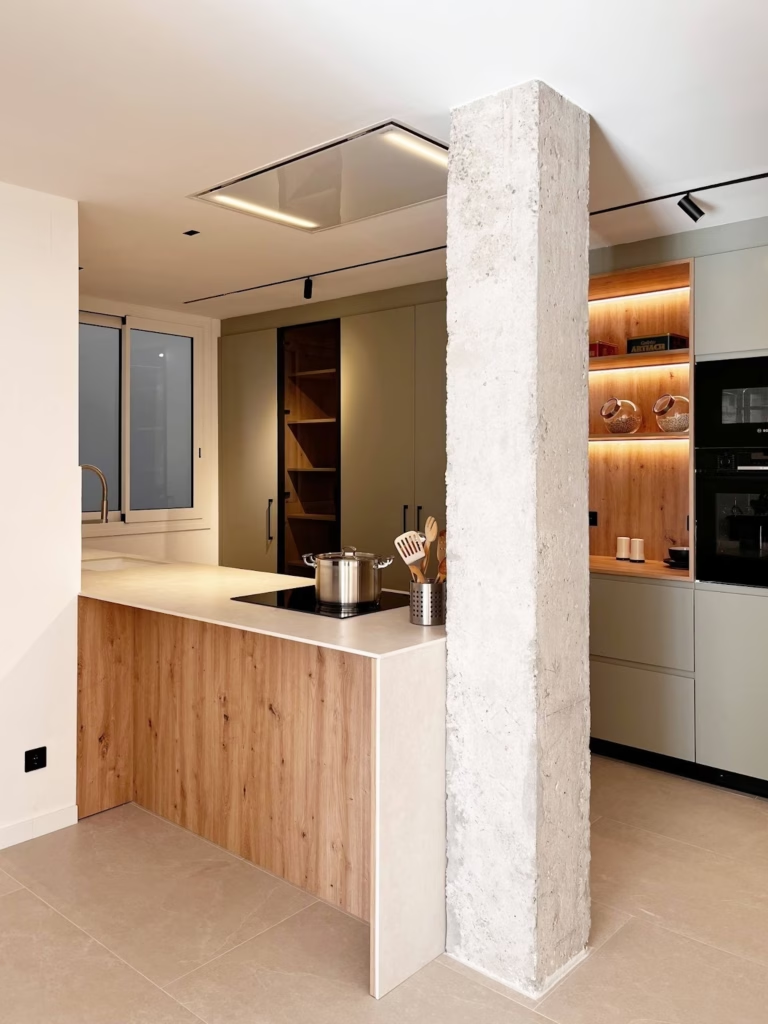
By opening the kitchen to the living room, visual and spatial barriers are eliminated. If you don’t have that option, glass enclosures can make a big difference, as they let in light and separate the environments.
As for artificial lighting, it is important to combine several points of light. Lighting under high furniture improves visibility in the work area and avoids annoying shadows. A well-distributed general light completes the set and makes the kitchen more welcoming.
A well-lit kitchen not only looks bigger: it is also more comfortable and safe.
4. Colors and materials: visual lightness
In small spaces, colors and materials play a fundamental role. It’s not about giving up personality, but about choosing wisely.
Light tones, such as off-whites, sands, or soft grays, help to visually expand the space. Combined with light woods, they bring warmth without overloading. In several of the projects we show here, this mixture creates balanced, bright, and very pleasant kitchens.
Continuous surfaces, fronts without handles or with integrated finger pulls, and countertops with clean lines contribute to a more orderly and light set. Fewer visual cuts, more sense of space.
If you want to introduce a more intense color, you can do it in small details. Sometimes, a well-chosen nuance is enough to give character without saturating.


