
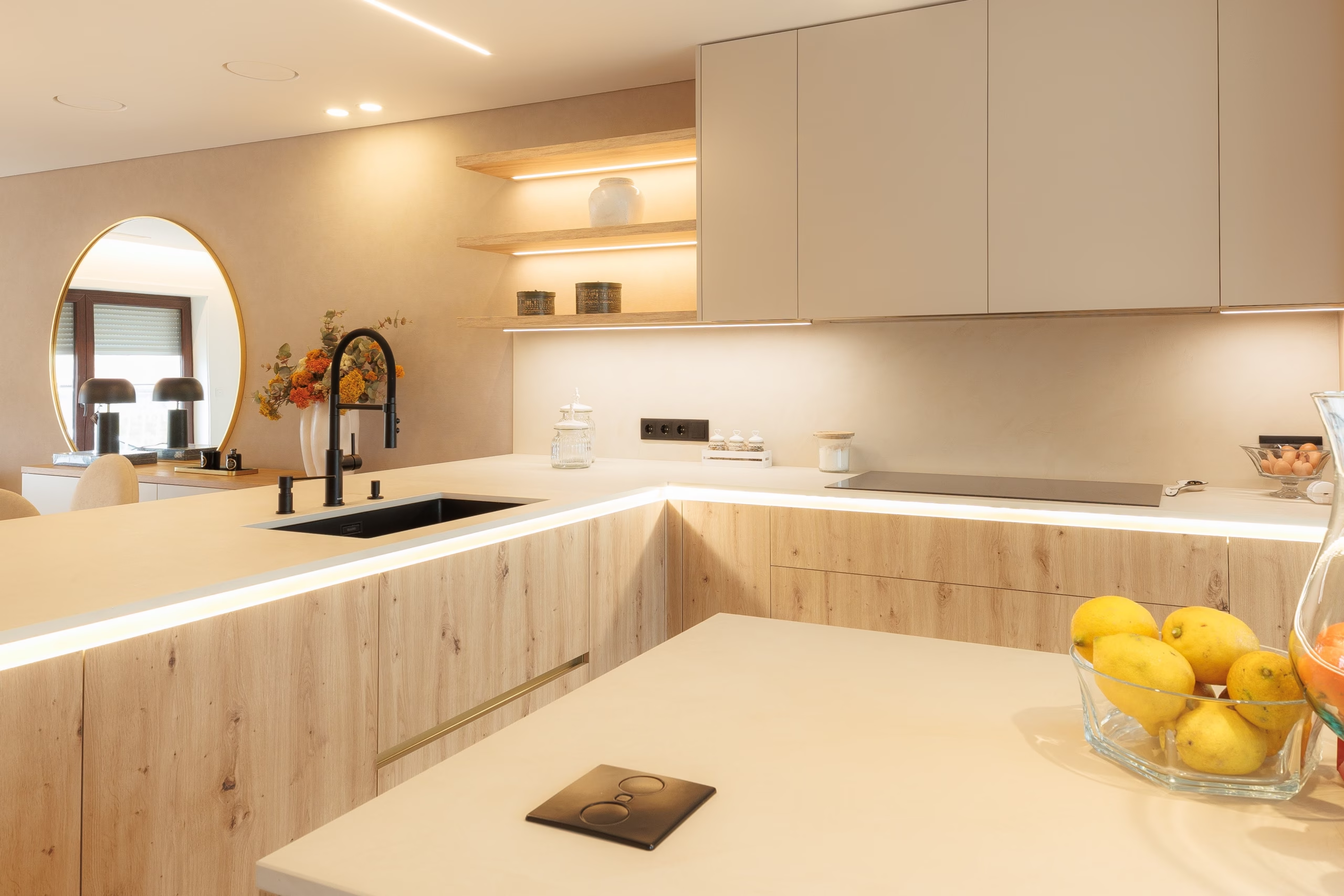
In a world dominated by the speed of trends on social media, where what is “essential” today seems outdated tomorrow, designing a kitchen “for life” requires a pause.
The kitchen is not a fast-moving consumer item; it is the epicenter of life in any home. Creating one is a style statement and an economic investment that must withstand the test of time without losing an iota of its functionality.
Designing for longevity is not just about choosing resistant materials (which it also is); it is about understanding the relationship between the space and the people who inhabit it.
Therefore, in this article we are going to give you a series of tips so that your kitchen feels current today, but also in 10 years.
The basis of timelessness: materials
The choice of materials is the first step towards a timeless kitchen. When we talk about durability, we are not only referring to physical resistance to humidity or impacts, but to visual resistance.
Natural materials, or those that faithfully emulate their essence, such as laminates, have the unique ability to age with dignity.
A clear example of this is wooden kitchen furniture. Its grains provide a warmth that does not expire, especially those in light tones such as our Vera, Quebec or Dakar models; made of oak.
But not only does wood withstand the passage of time well on a physical or stylistic level. The latest innovations in materials allow us to offer you a wide variety of high-pressure laminated or high-quality and resistant lacquered models. The key to making them last visually? The colors.
Color: beyond the Pantone of the year
Yes, we know, Pantone chose PANTONE 11-4201 Cloud Dancer as the color of the year 2025; a sublime white that aims to bring peace to every corner.
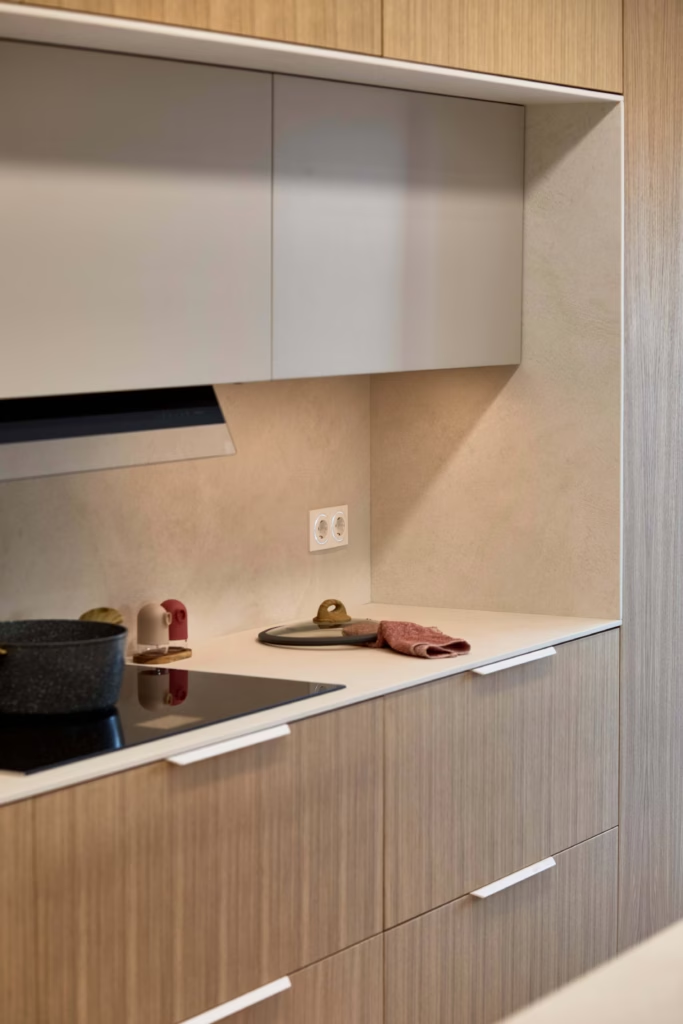
But, as we always say, there is life beyond white. Neutral colors, such as off-whites, warm grays, sands and even non-pure blacks, can function as a blank canvas, allowing the design to evolve over the years thanks to the accessories we include.
Functionality: the design that is not seen
It is clear that a kitchen that becomes uncomfortable is a kitchen with an expiration date. True sustainability in design lies in ergonomics and intelligent storage capacity.
Therefore, one of our objectives is to offer you solutions so that the furniture adapts to you (and not the other way around). To name a few examples:
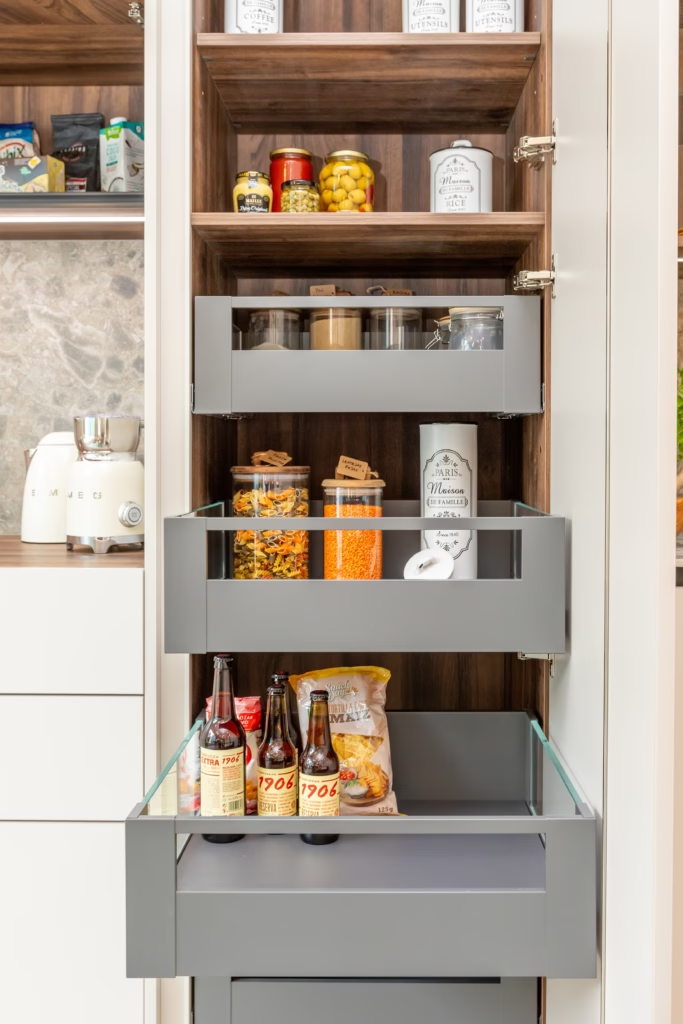
- Total extraction systems. They allow you to view the entire contents of a drawer at a glance, avoiding uncomfortable postures when using and cleaning it.
- Integration of appliances. The furniture in columns allows us to integrate appliances such as the oven, microwave or the dishwasher! at an ergonomic height.
- Lighting systems integrated into the furniture and motion sensors to facilitate mobility within the kitchen and avoid abrupt changes in lighting.
- Assisted and cushioned front and door opening mechanisms: the true silent revolution in your kitchen.
Sustainability is longevity
When we talk about sustainability, the first thing that comes to mind is recycling; but it is a concept that goes much further. It encompasses a key concept: consume less, but better.
How to apply this concept to your kitchen? Simple, choosing furniture and appliances that do not have to be replaced in a few years because they break or stop working. Designing with durability in mind is a declaration of intent.
But also betting on products that also respect the idea of sustainability when being manufactured, such as respecting the environment, betting on renewable energies, etc.
Because if something has to last, it is our planet.
Are you planning your new kitchen?
Now we have a tool that will help you a lot in the process: our new kitchen planner. With it you can start shaping your ideas so that, when visiting one of our distributors to design your kitchen, you can express them much better.


